| 1 |
Calculus and Linear Algebra |
18MAT11 |
C101 |
- C101.1: Apply the knowledge of calculus to solve problems related to polar curves and its in determining the bentness of curve.
- C101.2: Learn the notion of partial differentiation to calculate rates of change of multivariate functions and solve problems related to composite functions and Jacobians.
- C101.3: Apply the concept of change of order of integrations and variables to evaluate multiple integrals and their usage in computing the area and volumes.
- C101.4: Solve first order linear/nonlinear differential equations analytically using standard methods.
- C101.5: Make use of matrix theory for solving system of linear equations and compute Eigen values and Eigen vectors required for matrix diagonalization process.
|
| 2 |
Advanced Calculus and Numerical Methods |
18MAT21 |
C111 |
- C111.1: Illustrate the applications of multivariate calculus to understand the solenoidal and irritatingly vectors and also exhibit the interdependence of line, surface and volume integrals.
- C111.2: Demonstrate various physical models throughout higher order differential equations and solve such linear ordinary differential equations.
- C111.3: Construct a variety of partial differential equations and solve them by Exact methods.
- C111.4: Explain the applications of infinite series and obtain series solution of ordinary differential equations.
- C111.5: Apply the knowledge of Numerical Methods in the modelling of various physical and Engineering Phenomena.
|
| 3 |
Engineering Physics |
18PHY12/22 |
C102/C112 |
- C102.1/C112.1: Understand various types of oscillations and their implications, the role of Shock waves in various fields.
- C102.2/C112.2: Recognize the elastic properties of materials for engineering.
- C102.3/C112.3: Realize the interrelation between time-varying electric field and magnetic field, the transverse nature of the EM waves and their role in optical fiber communication.
- C102.4/C112.4: Compute Eigen values, Eigen functions for a particle using Time independent 1-D Schrodinger’s wave equation. Apprehend the principle of laser, working of different types of lasers and applications.
- C102.5/C112.5: Understand various electrical and thermal properties of materials like conductors, semiconductors and dielectrics using different theoretical models.
|
| 4 |
Basic Electrical Engineering |
18ELE13/23 |
C103/C113 |
- C103.1/C113.1: Analyze Basic DC and AC Electric Circuits.
- C103.2/C113.2: Able to explain the principle of operation, construction of 1 phase transformer, AC and DC machines.
- C103.3/C113.3: Able to explain the concept of wiring, protective devices and earthing.
|
| 5 |
Elements of Civil Engineering & Mechanics |
18CIV14/24 |
C104/C114 |
- C104.1/C114.1: Mention the applications of various fields of Civil Engineering.
- C104.2/C114.2: Compute the resultant of given force system subjected to various loads.
- C104.3/C114.3: Comprehend the action of Forces, Moments and other loads on systems of rigid bodies and compute the reactive forces that develop as a result of the external loads.
- C104.4/C114.4: Locate the Centroid and compute the Moment of Inertia of regular and built-up sections.
- C104.5/C114.5: Express the relationship between the motion of bodies and analyze the bodies in motion.
|
| 6 |
Engineering Graphics |
18EGDL15/25 |
C105/C115 |
- C105.1/C115.1: Ability to understand and visualize the Points, lines and planes with manual and computer-aided drafting.
- C105.2/C115.2: Ability to analyze the shape and size of different Solids using orthographic projections by manual and computer-aided tools.
- C105.3/C115.3: Ability to create 3D isometric view of objects and development of lateral surfaces and truncated shapes of the solids by manual and solid edge software.
|
| 7 |
Engineering Physics Lab |
18PHYL16/26 |
C106/C116 |
- C106.1/C116.1: Recall the concepts of interference of light, diffraction of light, Fermi energy.
- C106.2/C116.2: Understand the principles of operations of optical fibers and semiconductor devices such as photodiode, and NPN transistor, and frequency response of LCR circuits.
- C106.3/C116.3: Determine elastic moduli and moment of inertia of given materials with the help of suggested procedures.
- C106.4/C116.4: Gain practical knowledge of Magnetic field intensity due to current and spring constant of a spring.
- C106.5/C116.5: Understand the importance of measurement procedure, honest recording and representing the data, reproduction of final results.
|
| 8 |
Basic Electrical Engineering Lab |
18ELEL17/27 |
C107/C117 |
- C107.1/C117.1: Identify the common electrical components used for conducting experiments and verify Kirchhoff’s law for basic DC circuits.
- C107.2/C117.2: Compare the power factor of lamps and study the effect of open & short circuits.
- C107.3/C117.3: Determine the impedance of electrical circuits and analyze phase and line quantities with power consumed in a star and delta 3-phase load.
- C107.4/C117.4: Determine earth resistance and understand two-way and three-way control of lamps.
|
| 9 |
Technical English – I |
18EGH18 |
C108 |
- C108.1: Use grammatical English and essentials of language skills and identify the nuances of phonetics, intonation and flawless pronunciation.
- C108.2: Implement English vocabulary at command and language proficiency, Identify common errors in spoken and written communication.
- C108.3: Understand and improve the non-verbal communication and kinesics, Perform well in campus recruitment, engineering and all other general competitive exams.
|
| 10 |
Technical English – II |
18EGH28 |
C118 |
- C118.1: Identify common errors in spoken and written communication, Get familiar with English vocabulary and language proficiency.
- C118.2: Improve nature and style of sensible writing and acquire employment and workplace communication skills, Improve their technical communication skills through technical reading and writing practices.
- C118.3: Perform well in campus recruitment, engineering and all other general competitive exams.
|
| 11 |
Engineering Chemistry |
18CHE12/22 |
C102/C112 |
- C102.1/C112.1: Use of free energy in equilibria, rationalize bulk properties and processes using thermodynamic considerations, electrochemical energy systems.
- C102.2/C112.2: Cause & effects of corrosion of metals and control of corrosion. Modification of surface properties of metals to develop resistance to corrosion, wear, tear impact, etc. by electroplating and electroless plating.
- C102.3/C112.3: Production & consumption of energy for industrialization of country and living standards of people. Electrochemical and concentration cells, Classical, modern batteries, and fuel cells. Utilization of solar energy for different useful forms of energy.
- C102.4/C112.4: Environmental pollution, waste management and water chemistry.
- C105.4/C115.4: Different techniques of instrumental methods of analysis, fundamental principles of nano materials.
|
| 12 |
C Programming for Problem Solving |
18CPS13/23 |
C103/C113 |
- C103.1/C113.1: Illustrate simple algorithms from different domains such as mathematics, physics, etc.
- C103.2/C113.2: Construct a programming solution to the given problem using C.
- C103.3/C113.3: Identify and correct the syntax and logical errors in C programs.
- C104.4/C114.4: Modularize the given problem using functions & structures.
|
| 13 |
Basic Electronics |
18ELN14/24 |
C104/C114 |
- C104.1/C114.1: Describe the operation of diodes, BJT, FET and operational amplifiers.
- C104.2/C114.2: Design and explain the construction of rectifiers, regulators, amplifiers, and oscillators.
- C104.3/C114.3: Describe general operational principles of SCR and its application.
- C104.4/C114.4: Explain the different number systems and their conversions and construct simple combinational and sequential logic circuits using Flip-Flops.
- C104.5/C114.5: Describe the basic principle of operation of communication systems and mobile phones.
|
| 14 |
Elements of Mechanical Engineering |
18ME15/25 |
C105/C115 |
- C105.1/C115.1: Identify different sources of energy & their conversion process and explain the working principle of hydraulic pumps, IC engines & refrigeration.
- C105.2/C115.2: Recognize various metal joining processes & power transmission elements, also understand the properties of common engineering materials & their applications.
- C105.3/C115.3: Discuss the working of conventional machine tools, machining processes, tools & accessories.
|
| 15 |
Engineering Chemistry Laboratory |
18CHEL16/26 |
C106/C116 |
- C106.1/C116.1: Handle different types of instruments for analysis of materials using small quantities of materials involved for quick and accurate results.
- C106.2/C116.2: Analyze different types of titrations for estimation of materials using comparatively more quantities for good results.
- C106.3/C116.3: Demonstrate technical information by means of oral presentations and written reports/records as a team.
|
| 16 |
C Programming Laboratory |
18CPL17/27 |
C107/C117 |
- C107.1/C117.1: Write Algorithms, flowchart and program for simple problems.
- C107.2/C117.2: Correct syntax and logical errors to execute a program.
- C107.3/C117.3: Write iterative and recursive programs.
- C107.4/C117.4: Demonstrate the use of functions, arrays, strings, structures, and pointers in problem solving.
|





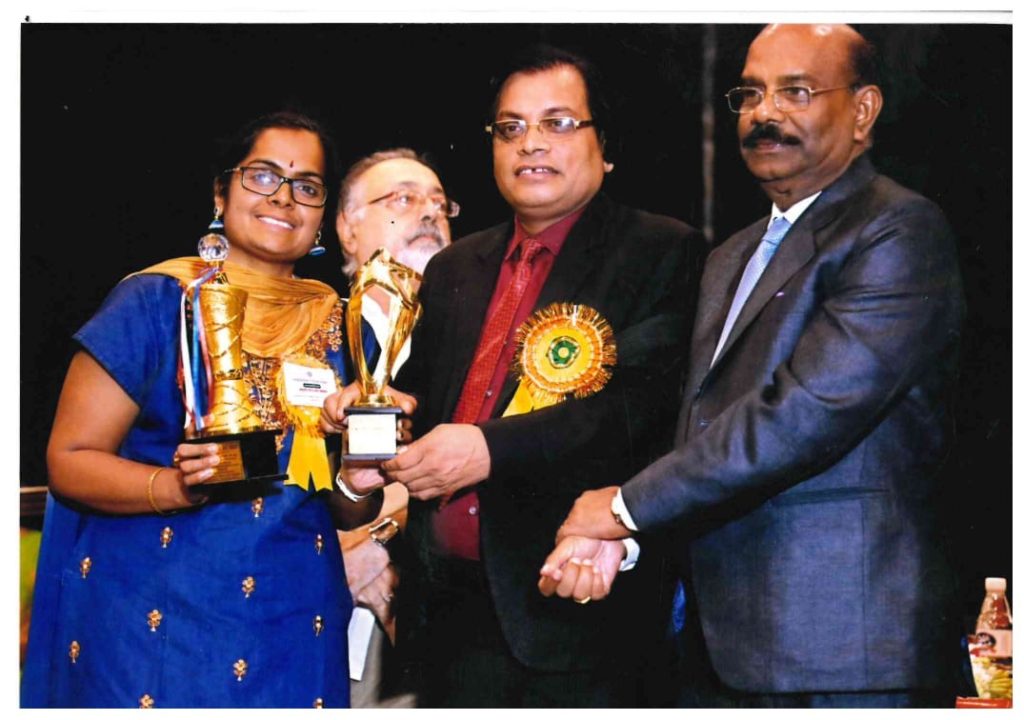
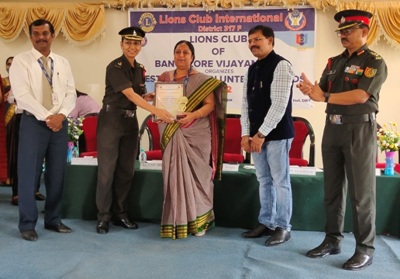











 Silver Medal
 Gold Medal